
The Best eSIM for Travel in 2024: My Top Picks for Stress-Free Data Abroad
The best eSIM for travel is a digital SIM card that lets you instantly connect to local networks abroad without fumbling with tiny plastic cards. You simply scan a QR code or download a plan before your trip, activate it upon arrival, and enjoy affordable data in your destination. This eliminates roaming fees and the hassle of swapping physical SIMs, letting you use maps and stay in touch right away. It’s the easiest way to get online while exploring new places.
Why Travelers Are Switching to Digital SIMs
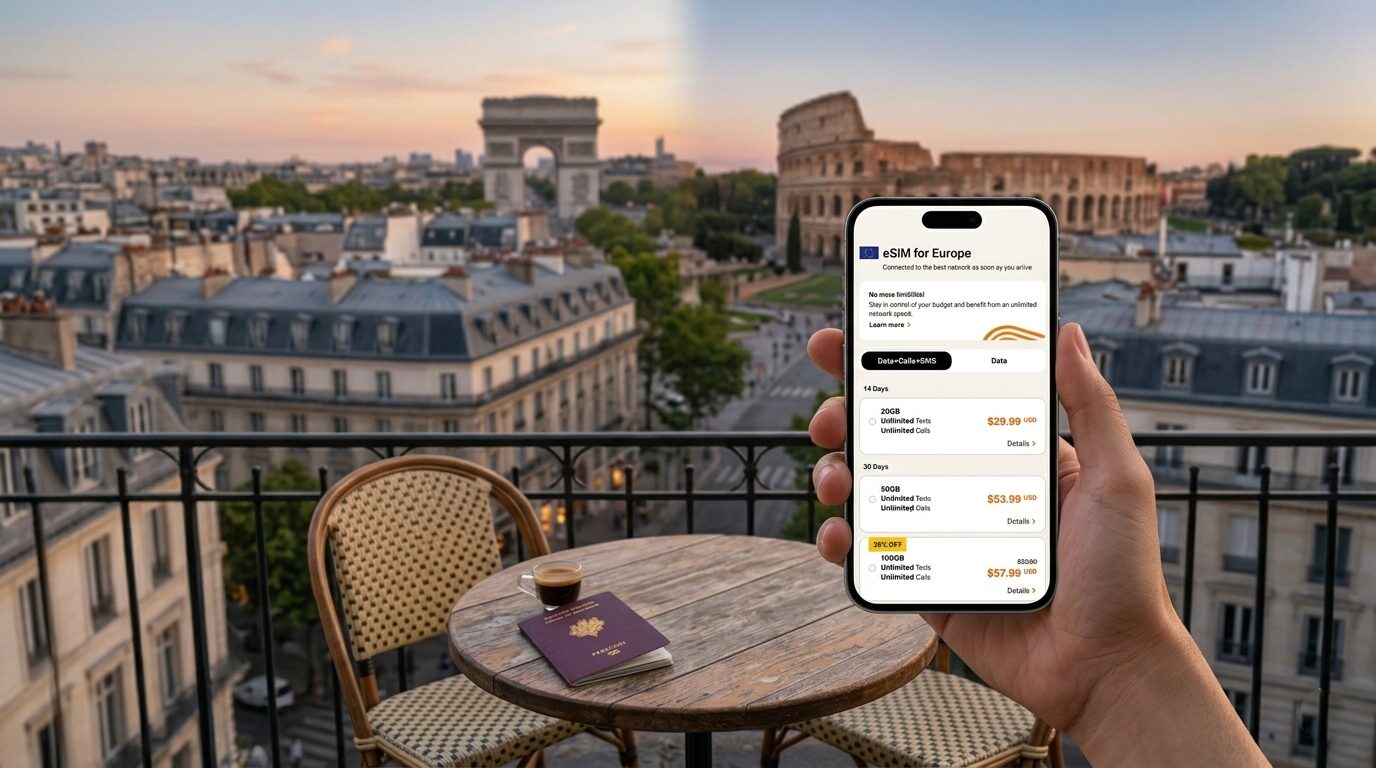
Travelers are switching to digital SIMs for travel because they eliminate the hunt for local physical SIMs at airports or kiosks, saving time and reducing hassle. The best eSIM for travel offers instant activation before departure, allowing you to connect immediately upon landing. This removes the risk of losing your primary physical SIM card, a common traveler anxiety. You maintain your home number for calls and banking while accessing local data networks for navigation, translation, and ride-hailing. This dual-line capability, combined with flexible data plans for multiple countries, makes a single eSIM far more convenient than juggling multiple physical cards or renting pocket WiFi.
Traditional roaming vs. eSIM: cost, convenience, and coverage
Traditional roaming ties you to expensive daily fees from your home carrier, while eSIMs unlock local pricing instantly, slashing your connectivity costs. Convenience flips entirely: roaming requires a physical SIM swap or carrier permission, whereas an eSIM lets you download a plan before you board. For coverage, roaming piggybacks on your provider’s partner networks, often throttling speed; eSIMs let you pick local carriers in each country, guaranteeing stronger signals. This shift makes choosing an eSIM for travel the clear winner for budget-conscious adventurers who want seamless, global connectivity without airport kiosk hassles.
How eSIM technology eliminates physical SIM swaps
For travelers, eSIM technology eliminates the need for physical SIM swaps entirely. Instead of hunting for a paperclip to eject a tray or risking a lost nano-SIM mid-trip, you simply scan a QR code or install a profile via an app. This remote provisioning instantly activates a local data plan while keeping your primary number active. No more fumbling with tiny cards in airport terminals or juggling multiple physical SIMs. You switch networks digitally, changing providers for better coverage in seconds without touching your phone. The process is seamless, direct, and eliminates the hassle of carrying, storing, or damaging fragile plastic SIMs.
Key Factors When Choosing a Mobile Data Plan Abroad
When snagging the best eSIM for travel, focus first on data allowance versus your actual habits—streaming drains gigs fast, while maps and messaging sip them. Check if the plan covers all your destinations without extra add-ons, since multi-country eSIMs avoid juggling multiple codes. Peak hour throttling can quietly ruin your trip, so read the fine print on “unlimited” offers. Also, ensure the app lets you top up easily mid-journey; real-time management beats buying a new plan when you run low. Speed caps matter less for social media, but essential for video calls or work backups.
Network compatibility and supported devices
Before you buy an eSIM for travel, double-check your phone actually supports it. Device compatibility is non-negotiable, as most US and EU models from iPhone XR onward work, but many budget or older Android phones don’t. After confirming your device, check that the eSIM provider connects to local networks in your destination—some plans only roam on one carrier, which can mean spotty coverage in rural areas. To test this before committing:
- Look up which local 4G/5G bands the eSIM supports.
- Verify your phone matches those bands using its spec sheet online.
- Read user reports about network performance in cities versus countryside.
Data limits, speed caps, and throttling policies
When selecting the best eSIM for travel, scrutinize data limits precisely; plans touting “unlimited” data almost always enforce a strict speed cap after a threshold, throttling you to unusable 2G or 128kbps. High-speed caps vary dramatically—a 10GB plan might throttle immediately upon hitting the limit, while premium plans reduce speeds gradually. Always check the “fair use” policy wording to avoid sudden, harsh throttling that cripples navigation or messaging. Confirm whether a plan offers a “soft cap” (slower but functional) or a “hard cap” (zero data) after the high-speed quota is exhausted.
Effective travel eSIMs define clear data limits, enforce predictable speed caps, and avoid aggressive throttling that renders basic connectivity useless.
Duration flexibility: short trips versus long-term stays
Duration flexibility determines whether a plan suits a weekend getaway or a months-long relocation. For short trips versus long-term stays, choose an eSIM offering daily, weekly, or monthly validity without lock-in contracts. Short trips benefit from prepaid data packs (e.g., 1–7 days) that auto-expire, avoiding unused credit. Long-term stays require plans renewable every 30 days or with pause features to prevent billing gaps. To match your itinerary:
- Confirm the eSIM’s maximum validity (e.g., 30/90/365 days).
- Check if top-ups extend the original plan or start a new period.
- Verify if unused data rolls over between renewals for extended travel.
Top Global Providers for Seamless Connectivity
After landing in Marrakech, my physical SIM was useless, but the best eSIM for travel from Airalo had me on local 4G instantly. Later, in a remote Tokyo alley, Holafly’s unlimited data let me navigate without hunting for Wi-Fi. For a week in rural Costa Rica, Nomad’s multi-country plan kept me connected across borders without reconfiguring settings. These Top Global Providers for Seamless Connectivity each solved a different journey: Airalo’s cheap regional passes for budget trips, Holafly’s high-speed cap for heavy streaming, and Nomad’s flexible top-ups for itineraries that shift daily. No registration hassles, no swapping cards—just a QR code scan and instant roaming.
Airalo: widespread regional and country-specific plans
Airalo shines as a top pick for best esim for travel because it offers both widespread regional plans, like covering all of Europe or Asia, alongside hyper-specific country-specific plans for places like Japan or Brazil. This lets you pick a cheap regional bundle if you’re hopping countries, or a local one for deep data dives in a single nation. Q: What if I’m visiting multiple countries in one region? A: Grab Airalo’s regional plan—it seamlessly covers all those spots, so you don’t need to install new eSIMs every time you cross a border.
Holafly: unlimited data options for heavy users
For heavy users, Holafly’s unlimited data eSIM plans eliminate the anxiety of tracking megabytes while traveling. You can stream high-definition video, conduct video calls, and navigate with live traffic maps all day without exceeding a cap. The primary practical trade-off is a fair-use policy that throttles speeds after a large daily threshold, typically around 2GB per day, during continuous high-bandwidth activity. This still provides reliable, usable connectivity for maps and messaging even after the threshold. Holafly does not offer a pay-per-data top-up; you purchase a fixed-duration unlimited plan upfront. This structure best suits travelers who prioritize constant access over cost-per-gigabyte efficiency, avoiding the hassle of monitoring a finite balance.
Ubigi: reliable coverage across multiple continents
For travelers seeking consistent performance, Ubigi stands out for reliable coverage across multiple continents. Its eSIM automatically connects to strong, local networks in regions like Europe, Asia, and North America, minimizing the risk of dropped signals. The service focuses on stable LTE/5G data for essential navigation and communication. A key advantage is its seamless switching between countries without requiring a new eSIM, ensuring uninterrupted connectivity during multi-stop trips. This practical stability makes Ubigi a dependable choice for those prioritizing consistent access over budget-focused plans.
Flexiroam: unique app-based data management
Flexiroam differentiates itself in the best eSIM for travel category through its unique app-based data management platform. Rather than relying on standard device settings, you purchase and activate virtual data packs directly within the Flexiroam app, which then manages your connection layers. This allows you to switch between local networks without swapping physical cards or adjusting phone configurations. The interface displays real-time usage and offers one-tap top-ups, giving you precise control over your data consumption. How does Flexiroam’s app-based system prevent roaming charges? It routes your data through its cloud platform, effectively bypassing your home carrier’s roaming tariffs while you maintain your primary SIM for calls.
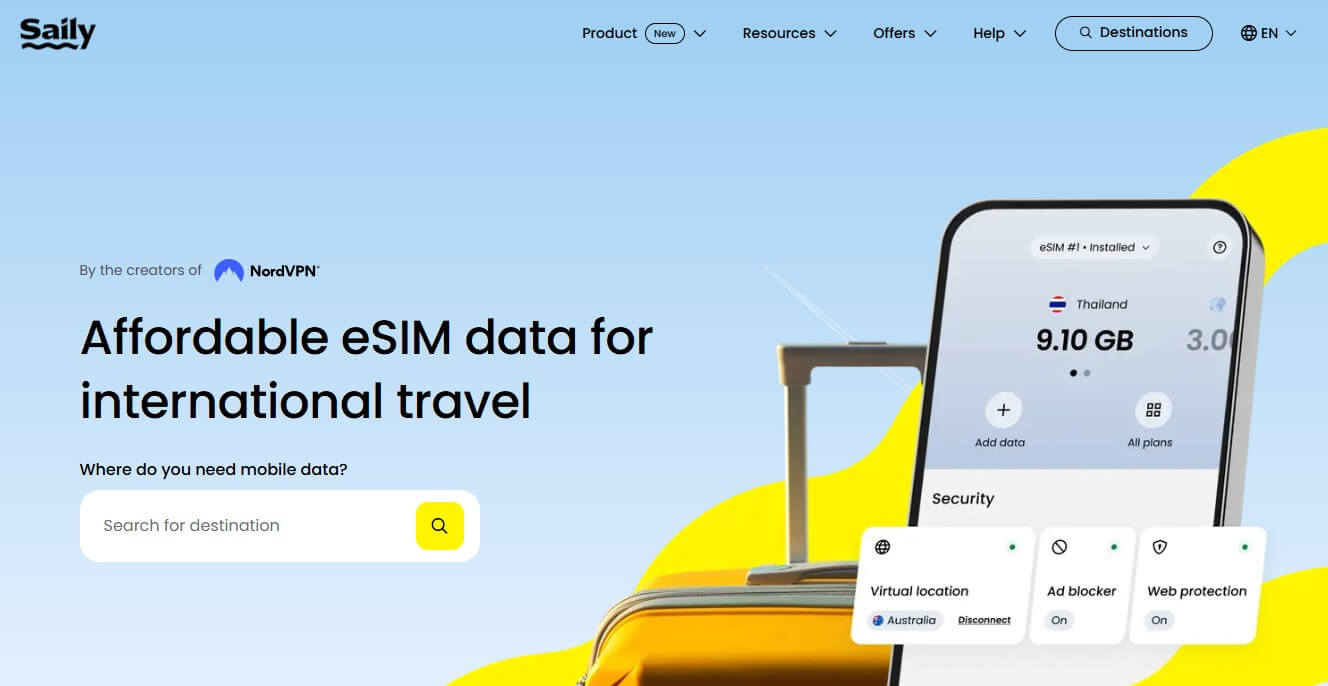
Regional Specialists Worth Considering
When evaluating the best eSIM for travel, regional specialists often outperform global providers for targeted coverage and value. Airalo offers robust Asia-focused packs, including reliable Japan and South Korea plans with high-speed data from local carriers. Nomad excels for European travel, providing tailored multi-country passes that bypass throttling common in universal plans. For Latin America, consider Holafly’s unlimited data options, though be aware of tethering restrictions. An Africa specialist like MTX Connect can be essential for consistent connectivity across patchy infrastructure. These specialists optimize pricing and network priority precisely where you need it, making them the practical choice for single-region trips.
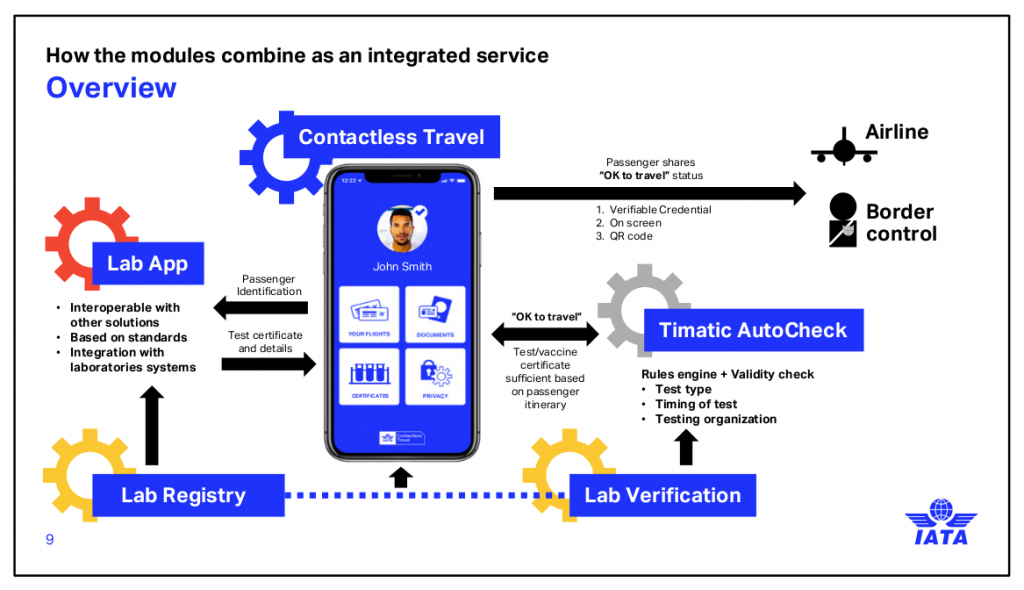
Europe-focused eSIMs: Orange Holiday and Vodafone
For travelers needing reliable connectivity across multiple Schengen countries, the Europe-focused eSIMs: Orange Holiday and Vodafone are primary contenders. Orange Holiday offers generous data allowances with a fixed validity period, ideal for a single extended trip, while Vodafone’s eSIM provides more flexible top-ups and often superior coverage in Eastern Europe. The critical differentiator is Orange’s network priority on its own infrastructure versus Vodafone’s reliance on partner networks in some regions. Both support hotspot tethering and easy activation via app, but you must verify specific country inclusion before purchase, as coverage maps vary.
Orange Holiday suits high-data users on a consolidated itinerary; Vodafone favors travelers needing modular, top-up-friendly plans across varied European sub-regions.
Asia-Pacific leaders: Singtel and HKBN CloudSIM
For travelers prioritizing the Asia-Pacific market, Singtel and HKBN CloudSIM stand out as focused regional specialists. Singtel’s eSIM leverages its direct ownership of infrastructure across Singapore, Australia, and Thailand, ensuring consistent high-speed LTE without third-party deprioritization. HKBN CloudSIM, conversely, specializes in multi-network aggregation across Hong Kong, mainland China, and Taiwan, offering failover between local carriers to maintain stability in congested areas. Where Singtel suits a single-destination trip requiring reliable speed, HKBN CloudSIM is preferable for itineraries spanning multiple APAC hubs, providing seamless connectivity through dynamic carrier switching.

For pure APAC performance, Singtel excels in owned-network reliability, while HKBN CloudSIM delivers adaptive coverage across several markets via local carrier hopping.
North America standouts: T-Mobile and Verizon prepaid
For reliable eSIM coverage across the US and Canada, T-Mobile prepaid offers extensive 5G access on its native network, ideal for urban and suburban travel. Verizon prepaid eSIM excels in rural and remote regions where its network density is superior, though speeds may throttle after high-data usage. Both plans include unlimited talk and text within North America. T-Mobile’s “Simple Global” data passes provide a straightforward top-up, while Verizon’s prepaid eSIM requires a US billing address for activation, making T-Mobile more accessible for short-term visitors seeking immediate activation for travel.
T-Mobile and Verizon prepaid eSIMs are top choices for North American travel: T-Mobile for easy setup and city coverage, Verizon for rural reliability and network depth.
Comparing Pricing Structures Without Hidden Fees
When evaluating the best esim for travel, direct provider comparisons often fail because most competitors bury activation fees, minimum top-ups, or “daily” rates that auto-renew even on unused days. You must isolate plans that advertise a single, transparent total. The key is comparing pricing structures without hidden fees by checking the checkout page for mandatory “service charges” or fine print requiring you to purchase a separate “starter” data pack before the advertised plan activates. The best travel eSIMs display a flat, all-inclusive cost for a specific data amount and validity period, with no surprise “connection” fees when you land. If a provider lists a price but makes you choose an “add-on” to reach that speed, it is not a transparent structure. Focus only on plans where the visible price is the final price.
Pay-as-you-go versus fixed package rates
For travelers, choosing between pay-as-you-go and fixed package rates hinges on usage predictability. Pay-as-you-go vs fixed package rates dictate your spending control: pay-as-you-go offers unrivaled flexibility, topping up only when data runs low, ideal for light, sporadic use. Fixed packages lock you into a set data allowance upfront—perfect for heavy streamers who want foreseeable coverage without surprise deductions. With pay-as-you-go, you pay per MB, often costing more long-term but avoiding waste; fixed plans give a burst of high-speed data at a lower per-GB rate, then slow or stop. The best travel eSIM matches your root habit—moderate use favors fixed for value, erratic use favors pay-as-you-go for freedom.
| Aspect | Pay-as-you-go | Fixed Package |
|---|---|---|
| Cost Control | Top-up only as needed | Paid upfront, fixed limit |
| Best For | Light, intermittent data use | Heavy, regular data consumption |
| Risk | Higher per-MB rate if used often | Waste if underuse allocated data |
| Flexibility | Change plans mid-trip | Locked amount until renewal |
Cost per gigabyte across different providers
When hunting for the best esim for travel, the real trick is ignoring flashy total prices and focusing on true price per GB. A plan advertising 10GB for $20 might seem great, yet a regional provider like Airalo often charges $4.50 per gigabyte for spotty coverage, while Holafly packs 1GB at a higher $6.00 but includes unlimited (throttled) data. For short trips, Ubigi undercuts both at roughly $2.80 per gigabyte for a 10GB Japan plan. Always calculate your per-gig cost—a 1GB daily plan from a budget carrier might cost $3.00 per gig, but a 5GB weekly plan from the same provider could drop to $1.60 per gigabyte.
| Provider | Data Allowance | Total Price | Cost per Gigabyte |
|---|---|---|---|
| AirTM | 10GB (Global) | $45 | $4.50 |
| Holafly | 10GB (Europe) | $59 | $5.90 |
| Ubigi | 5GB (Japan) | $14 | $2.80 |
Promo codes, referral discounts, and bundled deals
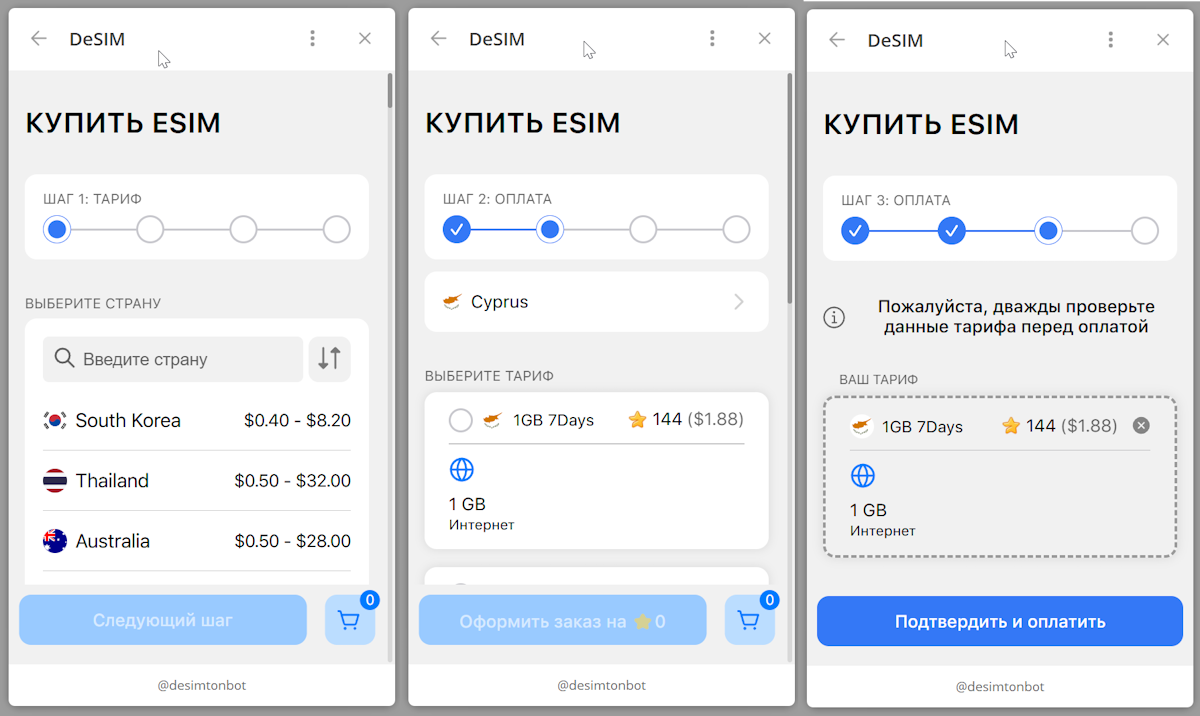
When comparing eSIM pricing without hidden fees, examine how promo codes, referral discounts, and bundled deals actually reduce upfront costs. First, apply promo codes at checkout for instant percentage-off or free data bonuses. Second, leverage referral discounts by sharing your code with travel buddies—both you and the new user often earn $5–$10 credit. Third, prioritize bundled deals that combine multiple regions or long durations (like a 30-day Asia plan) over single-country packs. Follow this sequence:
- Search for active promo codes via newsletters or social media.
- Share your unique referral link before purchasing.
- Opt for regional or global bundles to lock in lower per-GB rates.
Always total the final price after applying these discounts to ensure no inflated base rates offset the savings.
Installation and Activation Made Simple
When you land in Tokyo, jet-lagged and searching for a train map, the best esim for travel removes all friction. Installation and Activation Made Simple means you scan a QR code at the gate or tap an email link mid-flight. Within thirty seconds, your phone connects to a local network—no SIM tray fiddling, no airport kiosk queues. I once watched a traveler activate theirs while their partner still fumbled with a physical card.
That moment—silent, immediate connectivity—turns a potential headache into smooth arrival.
The entire setup is digital: buy, scan, and you’re live before customs. No passwords, no account creations, just direct access from your layover lounge.
QR code scanning and manual profile setup
Most top-tier travel eSIM providers simplify installation through instant QR code scanning, which automatically downloads and activates your cellular profile upon arrangement. For devices lacking a camera or encountering scan failures, manual profile setup is equally straightforward: you enter the activation code details—typically an SM-DP+ address and confirmation code—directly into your phone’s mobile network settings. Both methods require a stable Wi-Fi connection during the initial configuration. Once applied, the eSIM appears as a secondary line, allowing you to keep your physical SIM active for calls while using the travel data plan immediately.
Importance of installing before departure
Installing your eSIM before departure eliminates connectivity gaps upon landing, as activation often requires a stable internet connection for initial profile download. Without pre-installation, travelers risk being stranded without maps or ride-sharing apps in unfamiliar airports. Pre-loading ensures the eSIM is ready to latch onto a local network immediately, bypassing the need to hunt for airport Wi-Fi or purchase a physical SIM. This proactive step also lets you verify compatibility with your device and test the connection while still at home. One failed activation attempt mid-journey can derail an itinerary; pre-departure setup protects against that.
Troubleshooting common activation errors
Even the best eSIM for travel can hiccup. First, ensure your device is unlocked and supports eSIM. If the profile won’t download, try a stable Wi-Fi connection and toggle airplane mode. A “No Service” error usually means the APN settings are missing—manually add them from your provider’s email. If activation says “Failed,” restart your phone, then scan the QR code again from your account dashboard. Most issues resolve by refreshing the connection.
- Double-check your phone is unlocked and Japan eSIM eSIM-compatible before starting.
- Manually input APN settings if data doesn’t work after installation.
- Restart your device and re-scan the QR code for failed activations.
- Use a strong Wi-Fi signal when downloading the eSIM profile.
Managing Multiple eSIMs on One Device
You land in Tokyo, fumbling to switch to your Japan data plan while keeping your home number active for banking codes. Managing multiple eSIMs on one device becomes your lifeline. The best eSIM for travel lets you store several profiles simultaneously, so you can download a local Japan package and a regional Asia plan before leaving home. In your phone’s settings, you toggle between them like apps—your primary line stays on for calls, while the travel eSIM handles data. The key trick: label each profile clearly (e.g., “JAPAN DATA” and “HOME LINE”) to avoid sending an iMessage on the wrong plan. This way, you stream maps without swapping physical cards, and never miss a two-factor code from your bank back home.
Switching between primary and travel numbers
Switching between your primary number and a travel eSIM is a core convenience of modern trips. Most devices let you set your primary line for iMessage and FaceTime while assigning the travel eSIM solely for data, preventing roaming bills on your home number. You can instantly toggle which line handles calls and SMS for two-factor authentication. The dynamic trick is labeling each line precisely in your settings, so seamless travel number switching becomes a one-tap affair. This ensures you stay reachable on your home number for vital alerts while your travel eSIM powers navigation and local searches.
Dual SIM settings for voice and data separation
When you’re juggling a home SIM and a travel eSIM, the real trick is using your phone’s dual SIM settings for voice and data separation. You can set your home number for calls and texts while routing all mobile data through your travel eSIM, avoiding roaming charges. On an iPhone, go to Cellular > Cellular Data to pick your travel eSIM; for Android, dive into SIM Manager or Network Settings. Some phones also let you choose a “preferred SIM for calls” separately. Just remember, if you need to call home, your phone might still toggle data off briefly during the call—so test it before your trip to avoid surprises.
Storing backup profiles for future trips
For frequent travelers, storing backup eSIM profiles is critical to avoiding last-minute connectivity gaps. Before a trip, export each profile’s QR code or installation link as a secure PDF or password-manager entry. Store regional and global profiles separately, labeling them by destination and validity period. Never delete profiles with unused data, as they often reactivate on re-entry to the same region. On your device, keep at least one dormant local profile from a previous trip—it may offer better rates than a new purchase if you return unexpectedly.
Real-World Performance and User Reviews
When choosing the best esim for travel, real-world performance—not just advertised speeds—determines if you can actually stream route maps or upload trip photos. Travelers repeatedly report that Airalo delivers consistent 4G/LTE in major urban hubs, but reviews frequently note throttling during peak hours in dense spots like Tokyo or Paris, making browsing sluggish in crowded tourist zones. Conversely, Holafly’s unlimited plans earn praise for stable connectivity across rural landscapes, with videos loading smoothly where rivals falter. Critical user feedback highlights that download speeds often drop 30-50% from promised peaks, depending on local network congestion. For border-crossing trips, Nomad’s eSIMs attract favorable reviews for seamless switching, yet some travelers lament unreliable connections on remote islands despite strong coverage claims. Ultimately, scouring recent, location-specific user reviews on Reddit or Trustpilot is essential to avoid frustrating drops during critical navigation moments.
Speed test results in major tourist destinations
When checking speed test results in major tourist destinations, you’ll see huge gaps between providers. In Paris, local MVNOs often hit 150 Mbps downloads, while global roaming plans struggle at 20 Mbps. Rome’s Colosseum area shows 5G speeds of 200 Mbps on regional networks, versus 30 Mbps on budget travel SIMs. Tokyo’s Shibuya crossing typically delivers 180 Mbps on Japan’s premium eSIMs, dropping to 50 Mbps on discount options.

- Top-tier eSIMs average 150–200 Mbps in central London and Barcelona.
- Budget eSIMs often drop below 10 Mbps in crowded spots like Times Square.
- Mid-range providers offer steady 50–80 Mbps at major airports and train stations.
- Peak hours in Cancún reduce speeds by half on all but the fastest data plans.
Customer service responsiveness across brands
In real-world travel, customer service responsiveness across brands separates seamless connectivity from travel chaos. For urgent issues like activation failures or lost data, Airalo often replies within hours via in-app chat, while Holafly’s 24/7 WhatsApp support delivers near-instant resolutions—a critical edge for time-sensitive travelers. Conversely, budget contenders like Ubigi may take over a day to respond, forcing users to troubleshoot alone. Users report sporadic multilingual support from Nomad, where live agents vanish during peak hours. To navigate this:
- Test the brand’s live chat during off-peak hours before your trip.
- Save screenshots of your eSIM purchase and error codes for quick agent reference.
- Prioritize brands with documented average response times under 15 minutes.
Reddit and travel forum consensus on reliability
Across Reddit and dedicated travel forums like TripAdvisor and Lonely Planet’s Thorn Tree, a clear consensus on eSIM reliability emerges: network switching capability is the benchmark. Users consistently report that single-network eSIMs frequently fail in rural areas or during congestion, while multi-network providers like Airalo and Holafly earn praise for maintaining connectivity by automatically hopping between local carriers. Reddit threads caution that anecdotal “perfect service” posts often lack geographic context, whereas forum veterans emphasize that reliability is region-specific, with certain eSIMs dominating in Europe but struggling in Southeast Asia.
Hidden Pitfalls and How to Avoid Them
A common pitfall is assuming “unlimited data” means high-speed; many travel eSIMs throttle speeds after a small allotment. Always check the fair usage policy to avoid buffering maps and laggy Ubers. Another trap is buying a plan with no hotspot allowance, leaving you unable to share your connection with a laptop. Confirm tethering is included upfront if you rely on it. Also, avoid the mistake of activating the eSIM early; the clock often starts ticking immediately, not when you land. Some providers even charge for receiving non-downloaded setup instructions in roaming zones. Stick to top-rated apps from established telcos and read recent user reviews for the specific destination to sidestep these headaches.
Expiration dates and auto-renewal traps
When choosing the best eSIM for travel, expiration dates and auto-renewal traps require careful attention. Many travel eSIMs activate a timer the moment you install the plan, not when you first use data, causing your balance to vanish before your trip ends. Auto-renewal can quietly drain your account if you forget to disable it before the plan expires, often charging full price for a new cycle. To avoid these pitfalls, always check the activation window and plan duration before purchasing.
- Read the fine print: some eSIMs must be installed within 30 days, or the plan expires unused.
- Disable auto-renewal immediately after purchase in your account settings or app.
- Set a calendar reminder to use data before the plan’s hard expiration date, not the flexible validity.
Data prioritization on congested networks
When networks are congested, not all eSIM data is equal. A travel eSIM from a premium network operator often receives higher priority than a mobile virtual network operator (MVNO) that rents capacity. This means your connection can slow to a crawl during peak hours if your eSIM relies on a low-priority carrier. To avoid this, check if your provider explicitly uses a major local network tier or offers “priority data” in its terms. Apps that throttle video or background sync also help preserve usability during congestion.
Data prioritization determines your speed during congestion; choose an eSIM tied to a top-tier local network to avoid frustrating slowdowns.
Countries with limited eSIM support or restrictions
Even with the best eSIM for travel, certain destinations like China, Cuba, and Iran block international eSIM profiles entirely. Others, such as Turkey or Thailand, may restrict activation to local carriers only, causing connectivity gaps upon arrival. To avoid this, pre-verify eSIM coverage maps for your specific routes—global plans often fail in these zones. Purchase a physical local SIM as a fallback if your destination appears on restricted lists. This proactive check ensures your chosen provider isn’t rendered useless at customs.
| Country | Common Restriction |
| China | Blocks all foreign eSIM profiles |
| Cuba | No international eSIM available |
| Iran | Local carrier activation mandatory |
| Turkey | Foreign eSIMs often disabled |
Leave A Reply (No comments so far)
The comments are closed.
No comments yet